

As the Indian School of Business (ISB) marks 25 years since its founding, one question keeps coming up among MBA aspirants: is it actually worth nearly ₹40 lakh, and how do the Hyderabad and Mohali campuses compare?
We went straight to ISB's own official sources — press releases, fee pages and admission pages on isb.edu — to answer that with verified numbers, not guesswork.
ISB at a glance: Two campuses, one mission
ISB operates as a not-for-profit institution, funded entirely by private corporations, foundations and individuals rather than government grants. This is part of what gives it the flexibility to run a curriculum that isn't bound by AICTE regulations — a structural choice that lets it move faster on curriculum design than most Indian B-schools.
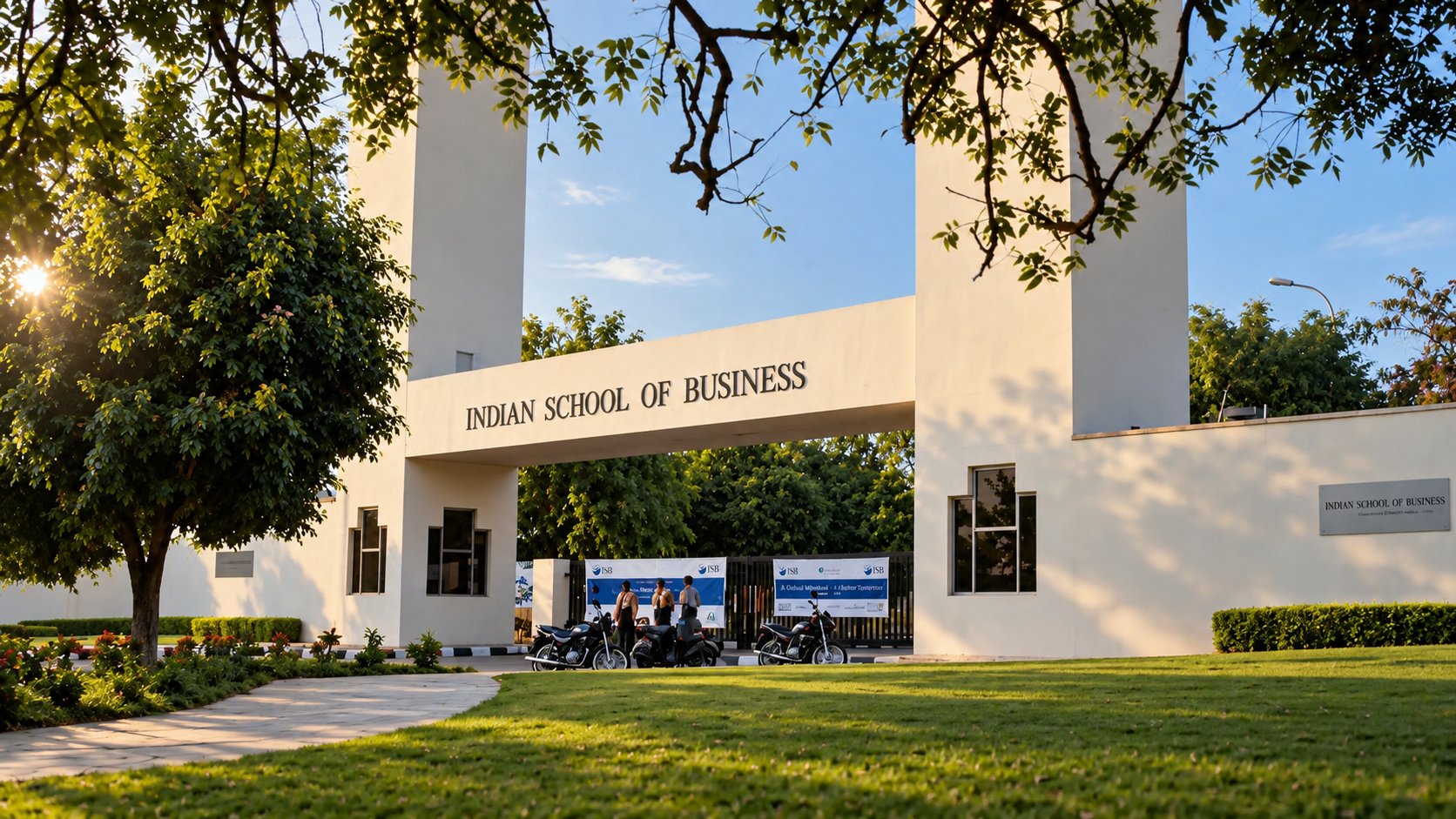
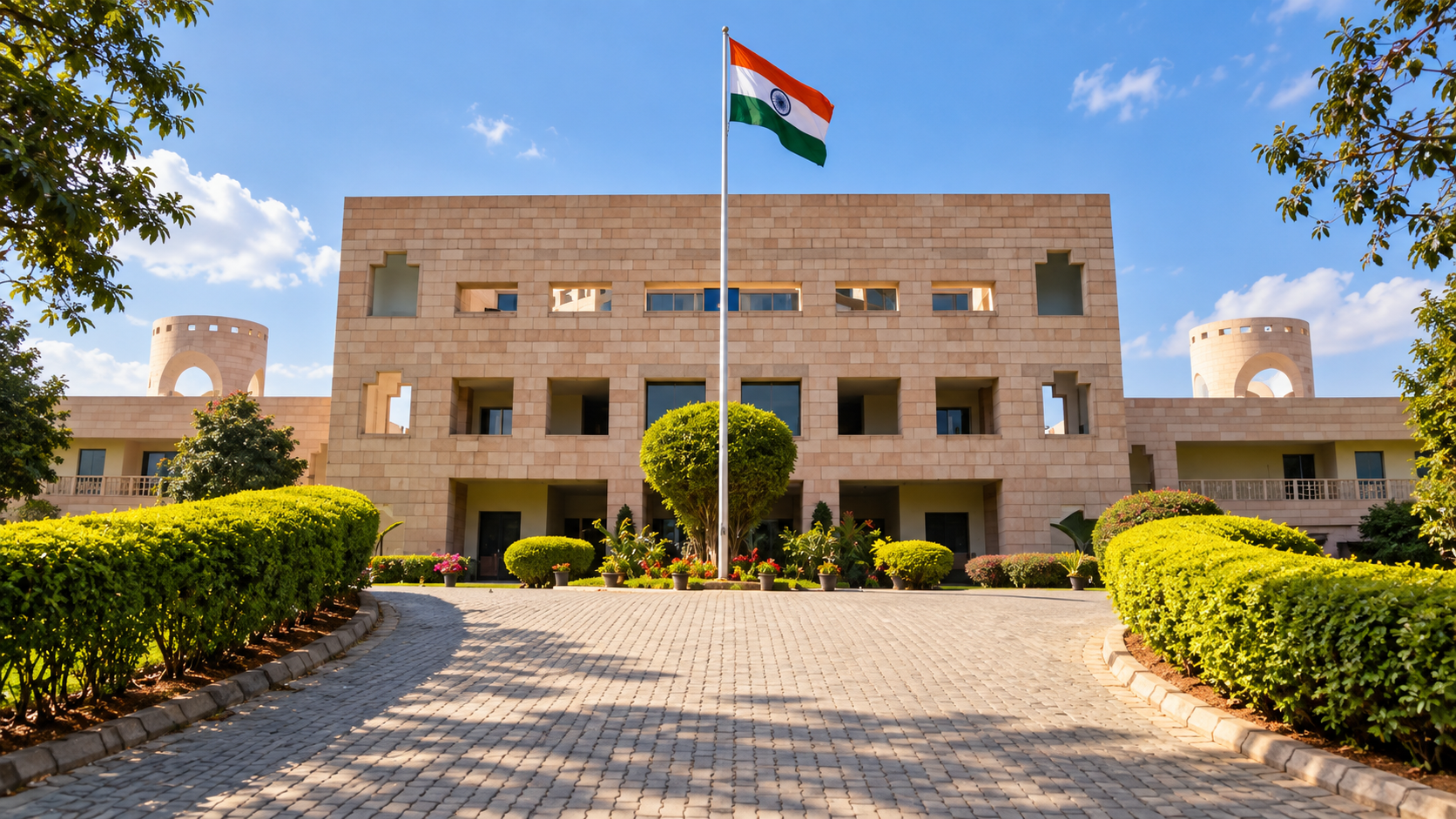
Hyderabad campus — Gachibowli, Telangana — the original campus, spread across 260 acres, operational since 2001.
Mohali campus — Knowledge City, Sector 81, Punjab — added in 2012 to expand capacity in North India.
Both campuses run the same admission and placement process, and hold the same academic standing — allotment between the two is based on a draw, not merit.
ISB holds the "Triple Crown" accreditation — AACSB, AMBA and EQUIS — a distinction held by only around 100 business schools worldwide, and ISB was the 100th school globally to achieve it.
Where ISB stands in 2026: #12 globally, #1 in India — for the third year running
This is the headline number every prospective student should know.
In the Financial Times Global MBA Rankings 2026, ISB's Post Graduate Programme in Management (PGP) climbed to #12 globally — a jump of 15 places from #27 in 2025 — while retaining its #1 rank in India for the third consecutive year and #2 rank in Asia.
Two specific numbers stand out from this year's ranking: ISB was ranked #1 globally for salary percentage increase(how much alumni salaries grow after the programme) and #6 globally for alumni network strength. Both are direct signals of career return-on-investment — arguably the two numbers that matter most to anyone paying nearly ₹40 lakh for an MBA.
ISB Placements 2026: The numbers that matter
ISB just closed placements for its 25th PGP cohort — its Silver Jubilee batch — and according to the institute's own official release, this was a record season.
1,117 job offers made to 808 students.
Average salary: ₹37.29 lakh per annum — up 11% from the previous year.
Highest offer: ₹1.56 crore per annum.
A 156% increase in average CTC compared to students' pre-ISB salaries.
25 first-time recruiters joined campus, including UBS, Reliance Foundation Hospital, NTT Data and Terradata.
30 international offers, up from 26 the previous year.
67% of students moved to a new industry, and 69% moved to a new function — reinforcing ISB's reputation as a career-switch platform, not just a salary bump.
Consulting, Technology and BFSI together accounted for the majority of offers. Accenture led recruitment with over 100 offers, followed by Mastercard and EY GDS with more than 40 offers each. Strong hiring also came from consulting firms including McKinsey & Company, BCG, Bain & Company and Deloitte, while the technology segment saw offers from Amazon, BrowserStack, Genpact, Google, IBM, InMobi, Razorpay and Uber. On the BFSI side, recruiters included Barclays, Nomura, Kotak Mahindra Capital, Jefferies India, Ambit Private and Avendus Capital, while e-commerce offers came from Flipkart, Myntra, Nykaa, Swiggy and Zomato (Eternal).
One structural feature worth flagging for students comparing B-schools: ISB runs a "Two-Offer Policy" — unlike many top B-schools where students must accept their first offer and exit the process, ISB allows students to hold up to two offers before deciding. This gives candidates meaningfully more room to find a role that fits their actual goals, not just the first thing on the table.
Programmes offered at ISB
ISB isn't a single-programme school. Depending on your career stage, there are several distinct paths.
PGP (Post Graduate Programme in Management) — the flagship one-year, full-time residential MBA. Requires a minimum of 24 months of work experience (as of March 31st) and a valid GMAT or GRE score.
PGP-YL (Young Leaders Programme) — a 20-month full-time residential programme at the Hyderabad campus, built for fresh graduates, final-year students, and candidates with limited (under 24 months) work experience.
PGP Pro — designed for working professionals who want to continue their careers while pursuing the programme.
PGP Max — for senior executives.
PGP MFAB — Food and Agribusiness Management.
Advanced Management Programmes, Fellow Programmes (Doctoral), and Executive Education — for professionals and organisations at different stages.
Fees: ISB PGP Programme Fee (2027–28 intake)
ISB's flagship PGP runs on the same fee structure across both campuses — Hyderabad and Mohali. There is no separate pricing between the two; ISB's official page confirms this explicitly.
Programme Fee: ₹34,48,000 + GST
GST (18%): ₹6,20,640
Subtotal (Fee + GST): ₹40,68,640
Refundable Security Deposit: ₹20,000
Total initial amount payable: ≈ ₹40,88,640
Accommodation: Shared accommodation included
Payment mode: Single instalment
The ₹34.48 lakh programme fee covers the admission fee, commitment fee, and tuition fee together — it isn't broken into separate line items for students to pay individually.
ISB's own page carries a standard disclaimer worth repeating here: the fee is indicative and subject to change based on evolving programme requirements, and the school reserves the right to revise it.
Note for readers: this ₹34.48 lakh figure is specifically for the 2027–28 intake, published on ISB's current official fees page — it is a different figure from the 2026 rankings and placement data covered above, which belong to the PGP Class of 2026. Students applying to an earlier batch should check ISB's archived brochure for that year's exact figure rather than assuming the same number applies, since fees typically rise year-on-year.
Hyderabad vs Mohali: Is there any real difference?
Short answer: no, not in anything that matters academically.
Both campuses offer the same PGP programme, same 12-month full-time residential duration, same fee, same curriculum, same faculty access, and equivalent placement services.
Campus allocation is handled by ISB itself — students don't choose, and admission decisions aren't campus-specific. The only real difference is geography, which matters mainly if a student has a personal reason (family, regional recruiter access, climate preference) to favour one city over the other.
Eligibility for PGP
A bachelor's degree in any discipline, from a recognised university.
Minimum 24 months of full-time, post-qualification work experience.
A valid GMAT or GRE score (test-centre scores only — home-based scores aren't accepted).
ISB doesn't officially publish a cutoff score, but based on recent batch profiles, competitive GMAT scores have typically ranged between 669–720, and GRE scores around 327.
Why the numbers behind ISB matter more than the brand name
Here's the honest way to think about this.
A lot of students choose a B-school based on brand recall — "ISB sounds prestigious" — without actually looking at what the data says about outcomes. The numbers above tell a more specific story.
If career switching is your goal, ISB's own placement data (67% industry switch, 69% function switch) suggests it is genuinely built for that kind of transition — more so than programmes designed primarily for fresh graduates.
If salary growth is your primary metric, the #1 global ranking for salary percentage increase, combined with the 156% average CTC jump this year, is about as strong a signal as a ranking can give.
If your target sector is consulting, tech or BFSI, ISB's recruiter base is clearly weighted there — useful to know if your interest lies elsewhere, since the strength of a placement season depends heavily on how well your target sector matches the recruiter mix.
If you're comparing ISB with a two-year IIM programme, remember the format is fundamentally different: ISB's PGP is a one-year, work-experience-mandatory programme, closer in structure to an accelerated executive MBA than a traditional two-year residential MBA. That changes the cohort profile, the classroom dynamic, and arguably the kind of learning you get.
The Bottom Line
ISB's 2026 numbers are, by its own official data, the strongest in its 25-year history — a #12 global ranking, a record ₹1.56 crore top offer, and an average salary that's grown 156% over pre-ISB compensation.
But a ranking or a headline salary number should never be the only input into a decision this significant. The real question isn't "Is ISB a good school?" — by any reasonable measure, it clearly is. The real question is whether ISB's specific format — one year, work-experience-mandatory, consulting-and-tech-heavy recruiter base — matches what you are trying to build your career toward.
At The Student Chapters, we believe that's the conversation students should be having before they fill out any application — ISB included.
Sources: ISB official press release — FT MBA Rankings 2026 • ISB official press release — 25th PGP Cohort Placements• ISB PGP Fees & Scholarships • ISB PGP Admissions Page • ISB Milestones
ऐसी और स्टोरीज़ चाहिए?
देशभर के कैंपस की ताज़ा खबरें पाएं — TSC कम्युनिटी से जुड़ें।


